Haflong, Assam
While Shillong Hill is out of the state of Assam, a new hill emerges, at 680m high, Upper Haflong. The main language spoken over here is Dimasa. In Dimasa, Haflong means "White Ants Hillock".
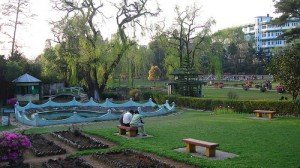
Haflong is a land of pleasing blue orchards and pera, pineapple and oranges. The nature of Haflong is a great attraction in itself. Add to it the picturesque beauty of Haflong Lake situated within the heart of this hill town.
The scenic hill resort of Haflong, 84-km north of Silchar, is the seat of the North Cachar Hills autonomous district council, where members of several ethnic groups including Dimasas, Hmars, Nagas and Mizos, belonging to different religious denominations - Christian, Hindu and Buddhist - live together in apparent harmony.

Haflong is spread along Main Road, which winds up from Silchar. The market, off Main Road in the centre of town is at its most bustling and colourful on Saturday, when it expands into an enclosure further down Main Road, and overflows with fresh betel nut, banana flowers and Dju Vie (rice beer) for space. For the best views, head out towards the ASTC bus stand.
Jatinga9-km south of Haflong on the Silchar road and covered with Blue Vandas Orchids, Jatinga is famed in local folklore as the place where birds commit mass suicide. The more brutal truth is that on certain foggy, moonless nights in autumn, local migrant birds can become disorientated while flying up the valley over the saddle of the hill and are attracted with lights by local people, who clobber them to death with bamboo poles and eat them.
There is a bird watching centre in Jatinga, where one may be able to stay if one can get permission from the district forestry office in Haflong. Buses to Silchar pass through, but it may be easier to make a day-trip from Haflong by auto-rickshaw.
Maibong47-km away from Haflong, on the banks of river Mahur, lie the ruins of the once flourishing capital of the Dimasa Kachari Kingdom. A stone house and temple of Kachari kings can be seen at Maibong.
Umrangshu or Umrongso112-km away from Haflong by road, the biggest Hydel plant under North East Electric Power Corporation (NEEPCO) has come up with dams across the river Kopili, a tributary of the Brahmaputra. Near Umrangshu, there is a hot water spring Garampani, which is believed to possess medicinal properties. Boating on the lake, hot water spring - Garampani and the exquisite scenery from the top of the hill are enough to captivate a tourist`s attention.


 As per the Indian Census report of 2001, Makum had a population of 15, 058. Males constitute 53% of the population and females account for the remaining 47%. In Makum, 13% of the population is less than six years of age. The average literacy rate of Makum is 68% which is higher than the national average literacy rate which is 59.5%. To be specific, the male literacy rate is 73% and the female literacy rate is 62%.
  Bhalukpong, a beautiful picnic and angling spot was the capital of `Bhaluka`, the grandson of King Banasura. It is 64-kms from Tezpur under the foot of Aka Hills (Arunachal Pradesh ). Remains of old fortifications are still visible. This picturesque place lies on the way to Bomdila in Arunachal Pradesh . Other attractions of Bhalukpong are a hot spring, a big orchid garden at Tipi and the unspoilt beauty of nature.


 The main market, Chowk Bazaar, is on MC Road roughly 1-km north of the tourist lodge, with the ancient Mahabhairav temple, dedicated to an incarnation of Shiva, still further north.


 According to the legend, Darang was the capital of demon King Banasura, an ardent follower of `Bhairavnath`, incarnation of Lord Shiva. Usha, the beautiful daughter of King Bana happened to see her love in her dream. Following the description of Usha, her confidante Chitralekha portrayed it in painting. The lover was none other than Aniruddha, Grandson of Sri Krishna, King of Dwarka, who was finally found out and the wedding of Usha and Aniruddha took place according to `Gandharva` tradition.


 Ferries run twice a day from Nimatighat, 12-km north of Jorhat, to Manjuli, which holds several important Vaishnavite Sattras. At present there are 22 Sattras on the island, including those in Garamur and Kamalabari, but one has to travel a few kilometers out of Kamalabari to see some of the more interesting ones.
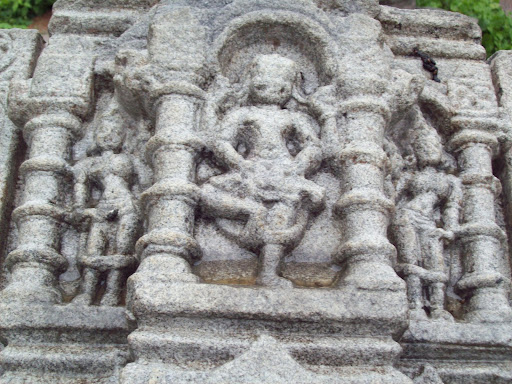
  The Lalmati-Duramari Ganesh Temple near Abhayapuri town under North Salmara Sub-Division, is one of the oldest temples of the state. The historicity of the images are yet to be ascertained. But after a study of the stone carving and modes related to the carved idols, archeologists opine that the temple and images belong to 8th to 10th centuries AD.

 challenging as there was no Sub-divisional infrastructure in this town, whereas the other newly created district head quarters of Assam had Sub-divisional infrastructures of their own. In the absence of such basic infrustructural facilities, the initiation of the activity of the district headquarter was almost started on the street, which was not only challenging task but also novel one.
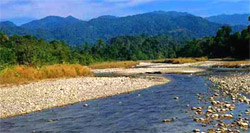
 The cities of Assam have rightly inherited the culture of diverse communities that have settled here over the years. Dating to more than two thousand years, all the cities of Assam saw several twists and turns in the process of its formation. Through the mountain ranges of Himalayas, the mighty Brahmaputra River passes through the heartlands, making the cities of Assam fertile and rich in flora and fauna. Dispur is capital, and also Guwahati claims equal fame and prestige. In fact it is an abode of university, schools, colleges and also some reputed cultural institutes.




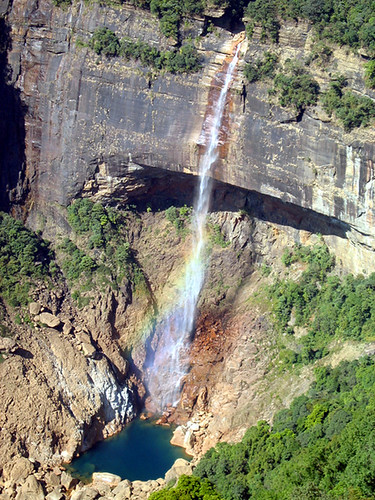

 Mairang is a prominent town in West Khasi Hills District of the northeastern state of India, Meghalaya. It is located in the west of Shillong, the state capital at a distance of 30 km. The nearest access points are airport and railway station at Guwahati. Located between 25.57° North latitude and 91.63° East longitude it has an average elevation of 1564 metres (5131 feet) above mean sea level.